Rockland Orthodontics

Uncategorized

Do All Your Baby Teeth Need To Fall Out Before You Get Braces?

Who doesn’t love to smile and show off their perfectly white and aligned teeth? Perfectly aligned teeth are sometimes a very important aspect in beautifying a person and developing their self-confidence over the years, especially, if the person is a developing youth. However, not everyone is born with a clean and aligned set of teeth and most people miss out on that because they did not realize at an earlier stage how misshapen their teeth would eventually get in the future.

Most dentists and orthodontists recommend adults to get braces for misaligned teeth because it is never too late. However, once your permanent set of teeth show up, it may get difficult and much more painful to get braces. If parents are looking to get braces for their child, it is better advised for them to start wearing braces early as possible.

Breaking Down the Baby Teeth Myth

Almost all dentists agree that it is not necessary for them to fall out because aligning baby teeth sets a path for your permanent teeth to set in.

The two most common problems that adults and kids face with their teeth are:

Crowded Teeth

This is when there is not enough room between the teeth for an adult tooth to set in so it pokes out from the gums against your jaw or cheek. This is a very common problem. If this happens, you are required to check in with the dentist before all of your baby teeth fall out. Otherwise it may misalign the other baby teeth, causing it to get uncomfortable with teeth prodding and poking you.

Stuck Tooth

When your permanent teeth develop, sometimes they may get stuck in your gums. This may again cause your teeth to misalign by weakening the roots of the teeth beside it which may fall out, causing you to have holes in your mouth.

Baby teeth basically reserve a place in your mouth for your permanent teeth to set in. Most orthodontists would take out a few baby teeth and use braces to set the remaining baby teeth. But another problem which may arise is when a baby tooth falls out prematurely or is knocked out. This may cause serious problems as a knocked out tooth would no longer be holding the other teeth in place so they may start shifting and moving.

How do orthodontists determine whether you need braces before your baby teeth fall out?

Orthodontists basically check whether both of your jaw bones have aligned correctly. Usually one jaw bone may develop faster than the other and if that is the case, the dentist may recommend treatment as soon as possible before your adult teeth have the chance to set in. If they’re both aligned, there is a lesser chance of your teeth becoming misaligned.

All in all, it is not necessary for all your baby teeth to fall out before you seek treatment but in some cases it can be. Matters such as your age may affect this the most. So, seek treatment as early as possible and our Team will recommend accordingly! Contact Rockland Orthodontics to schedule your braces consultation today.

Do All Your Baby Teeth Need To Fall Out Before You Get Braces? Read More »

How to Take Care of Your Retainer

Your orthodontic care does not end when the aligners are removed. Retainers are essential to stabilizing your new tooth arrangement. The braces or aligners force the teeth to return to the mouth, which involves the absorption of bones at the back of the oral cavity. To maintain your new look, you must use the retainers for a period that has been determined by Rockland Orthodontics. In many cases, patients must use these products for the rest of their lives. Depending on certain factors, the period can even be as short as three months. Retainers are used only intermittently, usually three to five times a week, for those who use them throughout their lives.The care of the retainers is essential to keeping your teeth in their new condition. The care of the retainers can be carried out as follows:

Clean Your Retainer Regularly

Treat your retainers as your own teeth! Carefully scrub your retainer with a toothbrush and water after each use. Avoid brushing the retainer with toothpaste, as the toothpaste might be abrasive and cause scratches that will make it difficult to clean the keep your retainer clean.

Wear Your Retainer Often

Use your retainer as often as recommended by your orthodontist. It’s best that you keep your retainer upright, so your smile stays perfect. Remember, retainers only work if you use them!

Avoid Heat On Your Retainer

Your retainer will only work if it fits properly! Your doctor will prepare it with the perfect support for your mouth, but it’s up to you to make sure it stays that way. Avoid leaving your retainer in a hot environment, such as a windowsill or a hot car. It will melt or wrap. Never put it in boiling water; you may think that boiling it is a great way to make it as clean as possible, but the heat will ruin it.

Keep Your Retainer Away From Pets

Yes, you love your furry best friend, but they have a special ability to snack on retainers. Keep your retainer safe and away from pets at all times.

Avoid Putting Napkins On Your Retainer

If you wrap your retainer in a napkin during meals, it may be easy for your waiter or you to throw it in the trash accidentally. To avoid getting into the bin, keep your retainer in its storage box!

Soak Your Retainer

To add extra cleaning to your retainer, try soaking it. You can buy retainer cleaner, which comes in tablet form, or you can make your own cleaning solution by mixing 1 part of sodium hypochlorite with ten parts of water. Soak for 5-10 minutes, and your retainer will be perfectly clean.

Replace Your Retainer When Needed

Even a well-made retainer eventually wears out. If you find that your retainer is deteriorating or behaving differently, contact your doctor. Replacing your retainer when due is an important part of maintaining your smile.

Carefully Put On And Take Off Your Retainer

When you put on your stand, make sure it is always on. There should be no gap between the teeth and the support. When removing it, do not twist it with your tongue or pull it to one side. Otherwise, the retainer may get damaged. Loosen your retainer in several places when you remove it and then ease it off. Do not forget to store it in its storage box!

Brush Your Teeth Before And After Wearing Your Retainer

Before and after putting on your retainer, brush your teeth. If you put your support on dirty teeth, your support will get dirty much faster, and it is not good for your teeth

Keep Your Retainer One Spot

It sounds obvious, but do not lose your retainer! Always keep it in the bag when not in use and keep it out of reach of dogs or children. If you lose it, make sure you replace it.

We cannot stress this point, use your support! Your teeth can change throughout your life. Even if you think your teeth are straight and will stay that way, it is essential that you continue to use your retainer! Taking care of your retainer will help to make your teeth look good and make the most of your investment, and do not forget to show off your big smile. For any retainer questions that you might have contact Rockland Orthodontics in New City.

How to Take Care of Your Retainer Read More »

When to Start Adult Orthodontic Treatment

Whether you’ve been putting it off for years because you don’t look forward to the procedure or are excited to finally have your teeth aligned, there likely will come a time when you need to see an orthodontist. Modern science has brought new techniques to the table which may make orthodontic treatment more pleasant than ever before, but the important thing to remember is that when you are finished you will look and feel better than ever before. There are a few reasons which may indicate it is time to make an appointment with Rockland Orthodontics in New City.

Prevention and Immediacy Of Adult Orthodontics

Like any other aspect of the health field, prevention is always the goal. If your teeth are out of alignment, they are never going to fix themselves or become straight on their own. Just because they are out of alignment doesn’t necessarily mean you need any treatment, that’s something our team needs to determine, using a variety of techniques to predict what potential problems may occur or whether the teeth are otherwise healthy. Although “now” might not seem like a convenient time for orthodontic work, having problems corrected immediately is always going to be more comfortable than postponing the procedure until there are additional problems to be corrected.

Dentist Recommendation

You may have become accustomed to whatever issues your teeth hold and not be aware of a potential problem. In such a case, your dentist will likely notice something wrong and refer you to an orthodontist. The specialist may determine there is nothing wrong, or they might suggest a preventative course of action. The bottom line is, your dentist is your friend and if they recommend a specialist take them at their word and trust there is a reason they want a more in-depth evaluation of your teeth than they can provide.

Cosmetic Versus Medical Issues

Although in some cases you may decide to use braces to straighten teeth for sheer cosmetic reasons, there is usually an underlying medical issue concerning the basic structure and integrity of your teeth which leads to the cosmetic issues. In other situations, your teeth may appear perfectly healthy in spite of an underlying problem. In each of these situations, our doctors will prescribe a specific treatment designed to make you look and feel better. It isn’t a rare case for someone to have become so accustomed to a malformed tooth they don’t realize it’s a problem until after the problem is corrected and they realize it feels better than it ever did throughout their adult life.

If you realize there might be a problem with your teeth, whether because you are suffering discomfort or your regular dentist sees a potential problem, consult with our doctors. In the best situation, our doctors may determine there is no cause for alarm and you can rest easy knowing your teeth are fine. The worst that can happen is the orthodontist repairs your teeth before they cause the kinds of problems which interrupt your daily life and career. Contact Rockland Orthodontics today to schedule a consultation!

When to Start Adult Orthodontic Treatment Read More »

Braces and Brilliant Smiles

When you mention braces, most people think of perfectly straight teeth, but there is so much more to orthodontia than just the aesthetics. For many, enduring metal brackets was a necessary part of growing up. Luckily, advances in dental technology have given us clear aligner therapy, and even tooth-colored ceramic brackets, as alternatives to shiny silver brackets. Looking beyond straight teeth and improved bite, orthodontic treatment from Rockland Orthodontics can benefit both oral and overall health.

What are Some Of The Hidden Health Benefits of Orthodontia?

Crowded and overlapping teeth make it difficult to brush and floss effectively. When food particles stay behind on teeth, a sticky substance called plaque builds up. As plaque goes relatively untouched between the teeth and gums, it becomes a breeding ground for bacteria. This opens the door to periodontal disease and tooth decay, both of which can lead to teeth and bone loss. Traditional braces and clear aligners guide teeth into alignment, allowing you to reach the in-between spaces that eluded you in the past.
Gums protect the roots of teeth, but they have difficulty keeping bacteria at bay when teeth are misaligned. An increased presence of bacteria in the mouth can impact your heart health. If the bacteria reaches your bloodstream, it is deposited on the wall of the heart. Clear aligner trays are removed for brushing and flossing, so they make it easier to remove excess bacteria than traditional braces.

Malocclusion is the term that describes a misalignment between the upper and lower jaws. When teeth line up properly, the TM (temporomandibular) Joint usually functions smoothly. Malocclusion puts pressure on the TMJ, causing anything from a dull ache to severe pain. In the past, traditional braces were the only option to fix bite issues. Many clear aligners can now be made to fix more serious cases of malocclusion.

Is Clear Aligner Therapy Right For Everyone?

Now that clear aligners can be fitted with rubber bands; more people have the option of choosing clear aligner therapy over traditional braces. Crowding, overlapping, gaps, and mild to moderate bite issues can be corrected with clear aligners. Cost may be prohibitive to some, but for many others, the benefits outweigh the cost. A thorough screening from Rockland Orthodontics will help show you which orthodontic treatment is right for you.

Traditional Braces vs. Clear Aligner Orthodontia

Traditional braces consist of old-school metal brackets, mini brackets, and tooth-colored ceramic brackets. Lingual braces placed on the back of the teeth to make them less conspicuous than traditional braces, but they still use brackets and wires to do the work. Brushing and flossing can be tricky since the brackets are cemented to the teeth. Staining is common, and in some cases can be permanent.

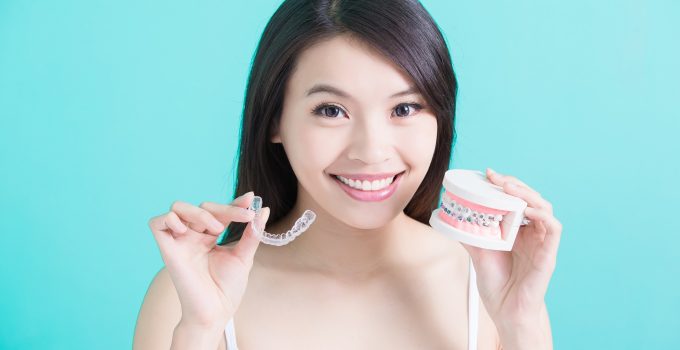
Clear aligner trays are worn for at least 22 hours a day. You remove them to eat and brush, so keeping teeth clean and stain-free tends to be easier with clear aligners. A set of clear plastic trays slowly guide teeth into place. Most people change trays every two weeks, though individual treatments plans vary. Like traditional braces, when treatment is complete in six months to two years, retainers keep teeth from shifting back to their old positions.

Rockland Orthodontics provides New City residents with answers to their orthodontic questions. Give us a call at (845) 352-0520, or contact us online to schedule an appointment.

Braces and Brilliant Smiles Read More »

6 Ways to Keep Teeth Clean with Braces

Now that you have braces, your teeth are more difficult to clean, so you have to be very careful to keep those new braces clean. You should brush your teeth properly after every meal and snack. Always keep your toothbrush handy. Food particles and plaque can become stuck to the brackets and leave you more at risk of tooth decay. Here are six ways to keep your teeth clean when wearing metal braces.

1. Brushing
Rinse your mouth with water before you begin brushing. This will break up loose food particles and make the rest of the brushing that much easier.
Brush with fluoride toothpaste. Begin at the gum line and brush your teeth at about a 45-degree angle. Then brush the top of the brackets, followed by the bottom of the bracket and the wire. An interdental brush is a great choice for this task because it can more easily reach the tooth surface. Go slow. The goal is to brush every tooth at the gum line and along the brackets so that as much tooth surface as possible is cleaned.
Replace your toothbrush more frequently due to the wear and tear from the braces. A good choice for students is to also carry a travel toothbrush in their backpack to school. Again, be sure to brush after every snack and meal.

2. Flossing
Flossing remains just as important when you wear braces. Using a floss threader can make this task easier. It will take some practice to thread the floss under the main wire. Parents may have to floss for younger children who may lack the coordination to thread the floss beneath the wire.

3. Water Jet
After brushing and flossing, use a water jet to remove any stubborn food particles that are stuck around the braces or between the teeth. Dr. Delgado recommends adding an antiseptic dental rinse (Peroxyl) to the water when using the jet.

4. Mouth Rinse
After brushing, use a fluoride rinse. We recommend using your fluoride mouth rinse at least four times a day to prevent minor inflammation of the gums. Antiseptic rinses, such as Peroxide, can also be used as needed for cuts or scrapes from the braces. A fluoride rinse also helps to prevent tooth decay. Remember that rinsing is not a substitute for brushing and flossing.

5. Retainer Care
Keeping your dental retainer clean is just as important. Whenever you are not wearing your retainer, soak it in a mouthwash rinse to keep it fresh and free from bacteria. Your retainer should be cleaned every day.

6. Braces-Friendly Diet
There are certain foods you will want to avoid when wearing braces. Foods and drinks with a higher acidic content are not as friendly to your teeth as those with a lower acidic content. For example, bananas are better for your teeth than oranges, water and milk are better than soft drinks, and so on. Your orthodontist can provide you with a list of foods that are better for your teeth while you wear braces and those which you should avoid.

Invisalign
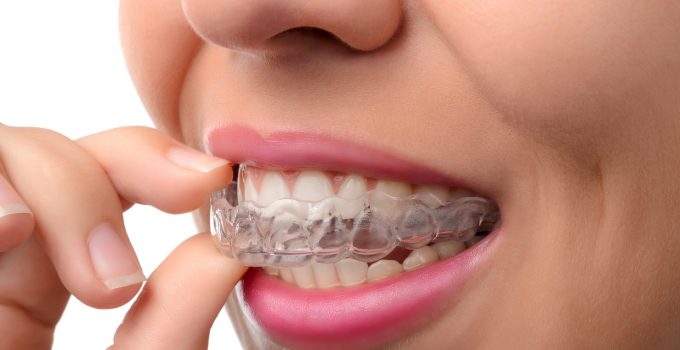
If a patient has fully-erupted molars, they are likely a good candidate for the Invisalign® system as an alternative to metal braces. Rockland Orthodontics can create a plastic tray called an aligner that fits over the teeth and works to straighten the teeth over time, just like braces. There are two numerous advantages to Invisalign®.The aligners are practically invisible, so people won’t even know the patient is wearing them. The other great thing is that the aligners easily removable so you can clean your teeth without brackets or wires getting in the way.

6 Ways to Keep Teeth Clean with Braces Read More »

Skip to content